In Short
- The research linking gardens to mood is strong enough to design from. What matters most is what you can see from inside, how enclosed you feel, and what you can hear.
- A green outlook from the rooms you use every day does more for you than a garden you only visit on weekends.
- Privacy works when it filters rather than blocks. Battens, screens and layered planting give you separation without making a small garden feel smaller.
- Planting that is busy but ordered reads as calm. Busy on its own reads as mess.
- Water and birdsong change what a garden sounds like, and sound is often what people are reacting to when they say a garden feels peaceful.
Spring is when most people in Melbourne look at their garden properly for the first time in months. You open the back door on a warm Saturday, stand there for a minute, and something about it is off. Most people can’t say what.
It’s rarely the plants. It’s usually a sightline, a boundary, or the fact that there is nowhere worth sitting. We’ve spent 30 years designing and building gardens across Melbourne, and the gap between a garden people live in and one they walk past comes down to a small number of decisions made early. Several of those decisions have decades of psychological research sitting behind them. Here’s what that research says, and what we do with it on a job.
What the research says about gardens and mood
Gardens change how you feel through three things you can design: what you see, what you hear, and how safe and settled the space makes you feel. The evidence for each is decent, and none of it is about how much the garden cost.
- Seeing greenery lowers stress markers, even briefly. Ulrich (1984) compared surgical patients recovering in rooms facing a stand of trees against matched patients facing a brick wall. The tree-view patients went home sooner, needed fewer strong painkillers and drew fewer negative notes from nurses.
- Very short looks count. Lee et al. (2015), working at the University of Melbourne, gave 150 students a 40 second break during a boring attention task. Half looked at a flowering meadow green roof, half at bare concrete. The green roof group made fewer errors and held their concentration through the second half of the task.
- Tree canopy does the work, and grass mostly doesn’t. Astell-Burt and Feng (2019) followed 46,786 Australian adults. Living in an area with 30% or more tree canopy, compared with under 10%, was associated with lower odds of psychological distress and lower odds of fair to poor general health. More grass did not show the same benefit.
- There’s a rough dose. White et al. (2019) found that people getting at least 120 minutes a week of nature contact reported better health and wellbeing, and that it made no difference whether that came as one long visit or several short ones. Their study measured public green space and left private gardens out, which is a fair reason to think a garden you actually sit in is doing at least as much.
- Natural sound has its own effect. Buxton et al. (2021) pooled around three dozen studies. Water sounds were most strongly linked to better health outcomes and positive feeling. Bird sounds were most strongly linked to lower stress and annoyance.
None of that tells you where to put a bench. The design research does. Browning, Ryan and Clancy (2014) set out 14 patterns of biophilic design, which is the practice of building human contact with nature into a space on purpose. Kaplan and Kaplan (1989) explain why some views hold your attention without draining it. Appleton (1975) explains why we like sitting with our back covered and a view in front of us. The rest of this article is those ideas turned into decisions we make on site.
Seven garden design decisions that change how a space feels
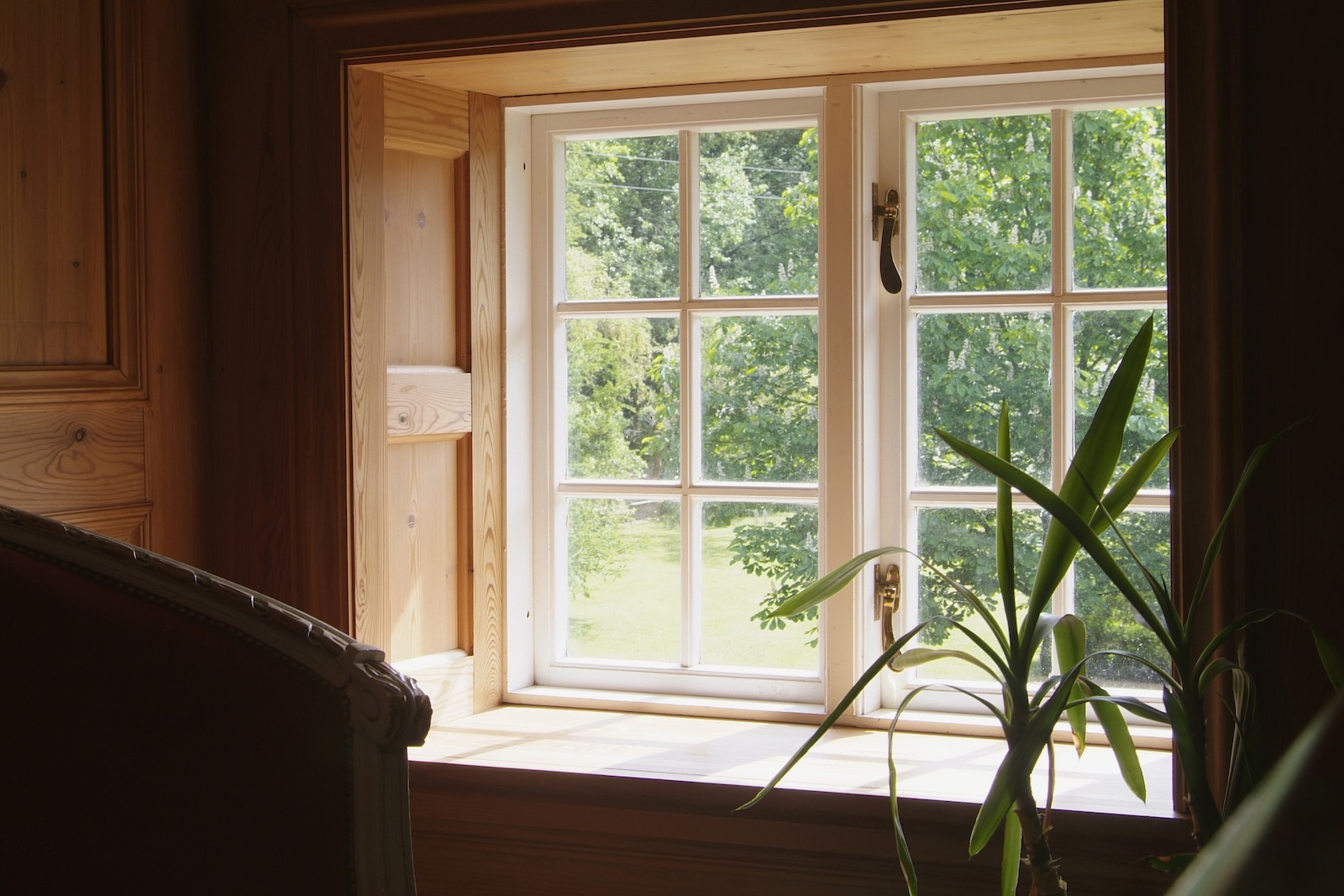
Give the rooms you use most a green outlook
The garden you look at is used far more than the garden you walk into. Ulrich’s patients never went outside. So the first thing we work out on a site visit is what you see from the kitchen bench, the desk and the couch, and whether those views currently end at a fence.
On our Kew Canopy project the reflection pond winds down the side of the house, which is the strip most people write off. The windows along that side now look onto still water that holds the sky and shifts with it, so the view from those rooms is a different thing at eight in the morning and again at six. At East Melbourne Terrace, the layered beds sit where they read from inside, which matters more in a terrace where the rooms are narrow and the windows are tall. From a chair you get grasses moving at eye level.
If you only change one thing about your garden, change what you can see from where you sit indoors.

Make privacy filter rather than block
Feeling overlooked keeps you slightly on guard, and you can’t relax in a space you’re on guard in. The instinct is to build something solid. In a small garden that usually backfires, because a solid boundary at eye level makes the space read as a box.
At Caulfield Courtyard the boundaries close in on every side and neighbouring windows look down into it. We used timber batten screens and gates rather than solid fencing. Battens let light and air through, so instead of a wall you get shifting shadow moving across the gravel all afternoon, and separation you can still breathe in. The gravel does quiet work of its own, part of it the crunch underfoot that tells you you’ve arrived somewhere. The cypress battens we use on screens and fences are 100% sustainable Australian timber and need no chemical treatment.
Planting does the same job higher up. A tree or a tall shrub placed between you and a neighbour’s upstairs window blocks the sightline that bothers you without walling in the ground you’re standing on.
Put the seat where you can see the rest of the garden
Appleton (1975) called it prospect and refuge: people settle where they have cover behind them and an outlook in front. Dosen and Ostwald (2016) reviewed 34 studies testing the idea and found the evidence strongest in outdoor settings and patchier indoors, which is convenient, because outdoors is where we’re working.
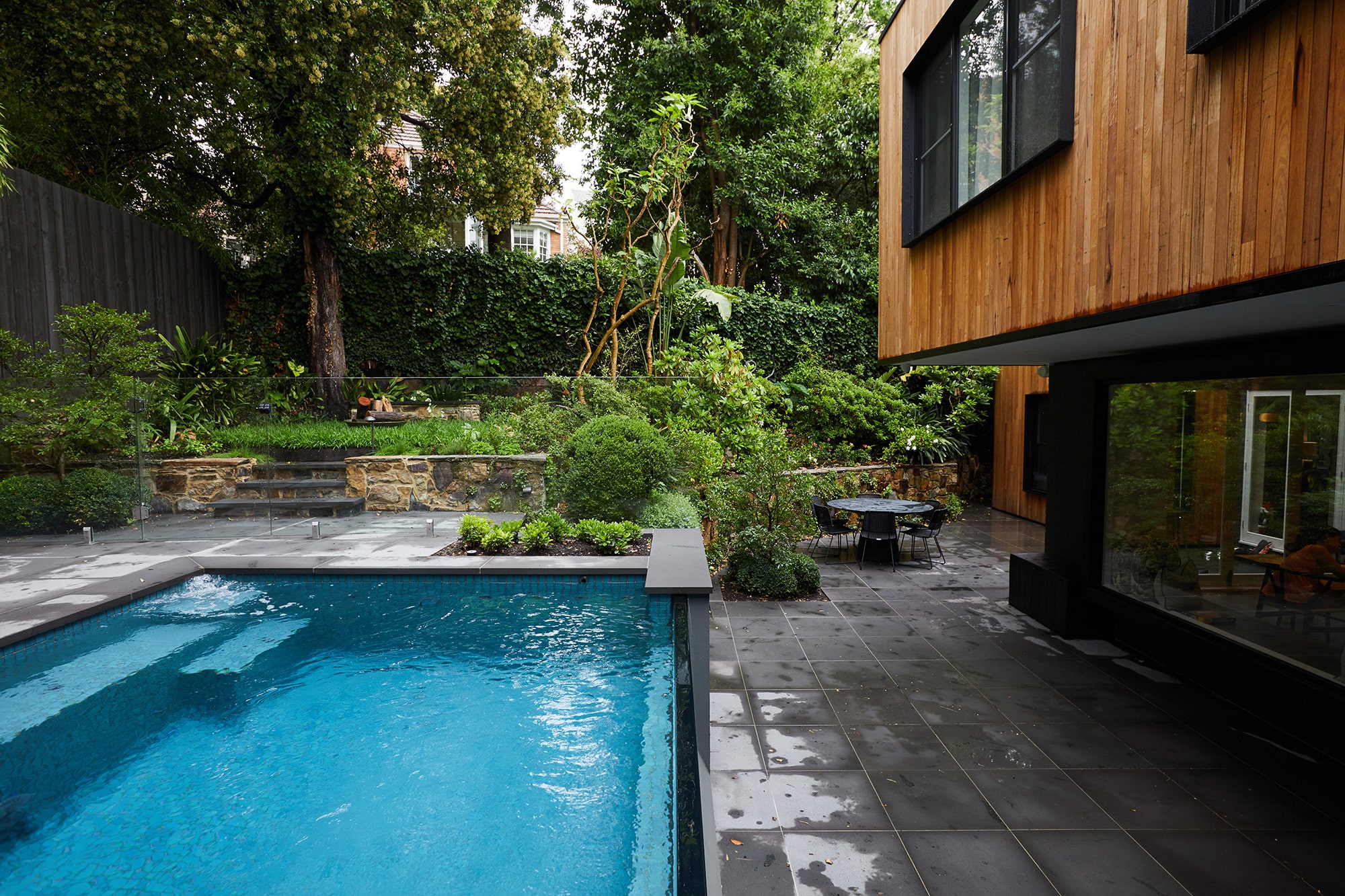
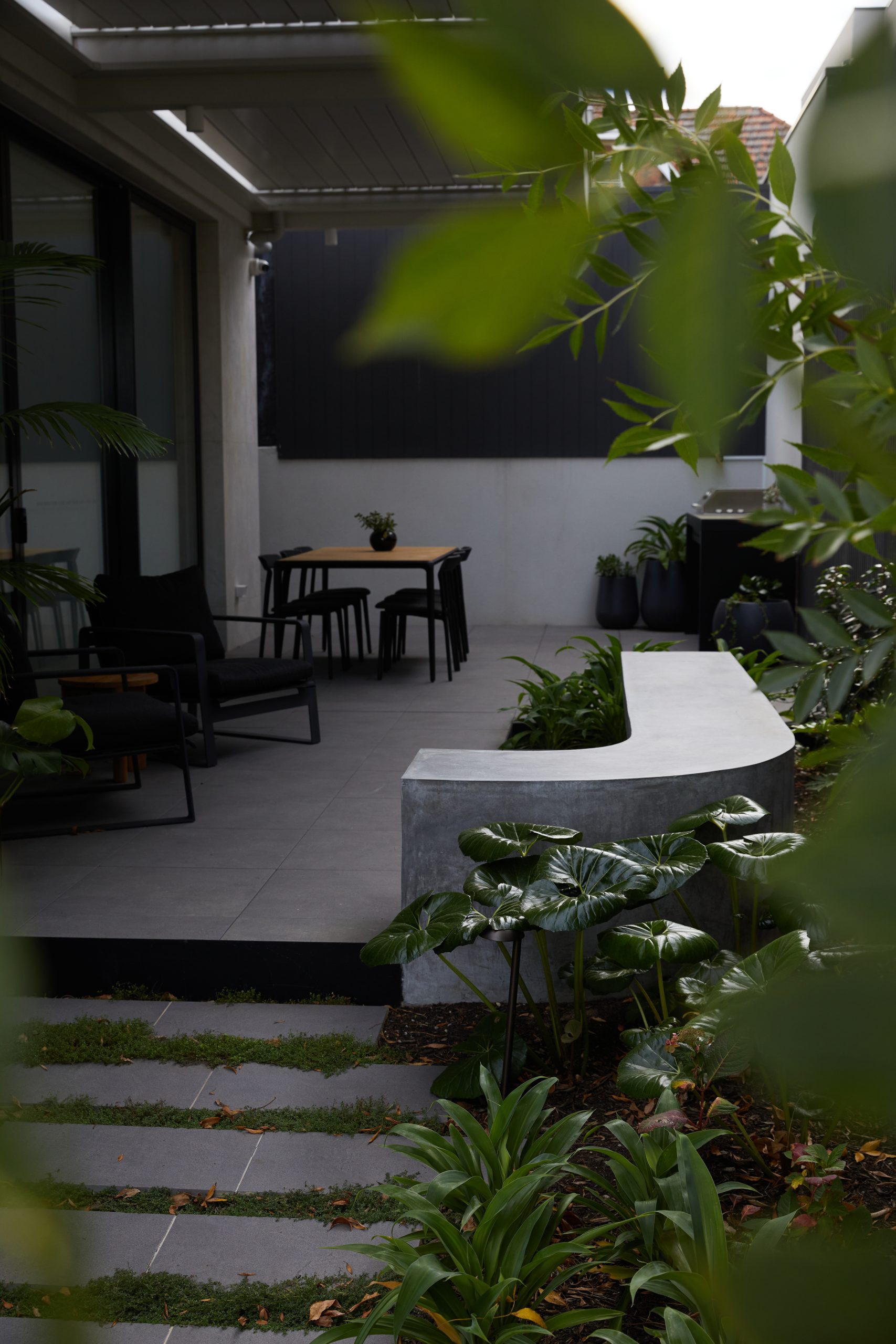
In practice it means the seat goes in before the planting. At Kew Curve, a curved, cantilevered concrete bench appears to float, and every layer of that garden was set out to be looked at from it. Sit there and you have the house at your back and the planting running away in front of you, which is the arrangement Appleton was describing. At Toorak Poolside, the entertaining area and fire pit face out across the pool, and because we sank the pool into the slope and left one side partly exposed above ground, nothing interrupts that view on that edge.
A bench against a back fence with a view of the house rarely gets used. The same bench turned around usually does.
Let the planting be busy, as long as it's ordered
Kaplan and Kaplan (1989) found that people prefer scenes with plenty going on, provided the scene is legible enough to make sense of at a glance. Browning and colleagues call the same thing complexity and order. Too little and the space is boring. Too much without structure and you get visual noise, which is what a garden feels like when it has been added to for ten years without a plan.
The structure is what stops layered planting reading as mess. At East Melbourne Terrace, ornamental grasses run through perennial flowers with shrubs and trees above them, and the bluestone underneath gives the eye a clear line to follow through all of it. At Caulfield the grasses do the moving, the sculptural shrubs hold the eye where we want it held, and the perennials come and go through the year so the courtyard is never quite the same garden twice. It’s the same principle with a different palette.
If your garden feels restless, the fix is usually one repeated element, a hedge line, a single paving material, a plant used three times, rather than fewer plants.
Design what the garden sounds like
Most Melbourne gardens have traffic in them. You stop hearing it consciously and keep reacting to it. Adding a sound you want is more effective than trying to remove one you don’t.
Water is the reliable one, and Buxton et al. (2021) found water sounds carried the strongest link to positive feeling of any natural sound they looked at. The pond at East Melbourne Terrace changed that garden as much by ear as by eye. It’s an inner-city block, and what you notice sitting in it now is water rather than the street. Bird sound follows planting: layered beds with seed, nectar and cover bring birds in, and the same study found birdsong had the strongest link to lower stress.
Where a spot is genuinely noisy we place the water feature between you and the noise rather than in the middle of the lawn, so the sound you want arrives from the direction of the sound you don’t.


Give people a reason to walk further in
Browning and colleagues call it mystery: a partly obscured view pulls you towards it. It’s why a path that curves out of sight gets walked and a straight path to a shed doesn’t.
Kew Curve is built on this. Staggered paving leads through zones that change character as you move between them, and an informal crazy paving path threads through the entrance bed with dichondra filling the gaps, so the stones sit soft underfoot rather than hard. The garden rewards a slow walk instead of showing itself in one look. On a small block that’s the cheapest way to make a garden feel bigger, because you can’t take it all in from the door.
Plan the hours after six o'clock
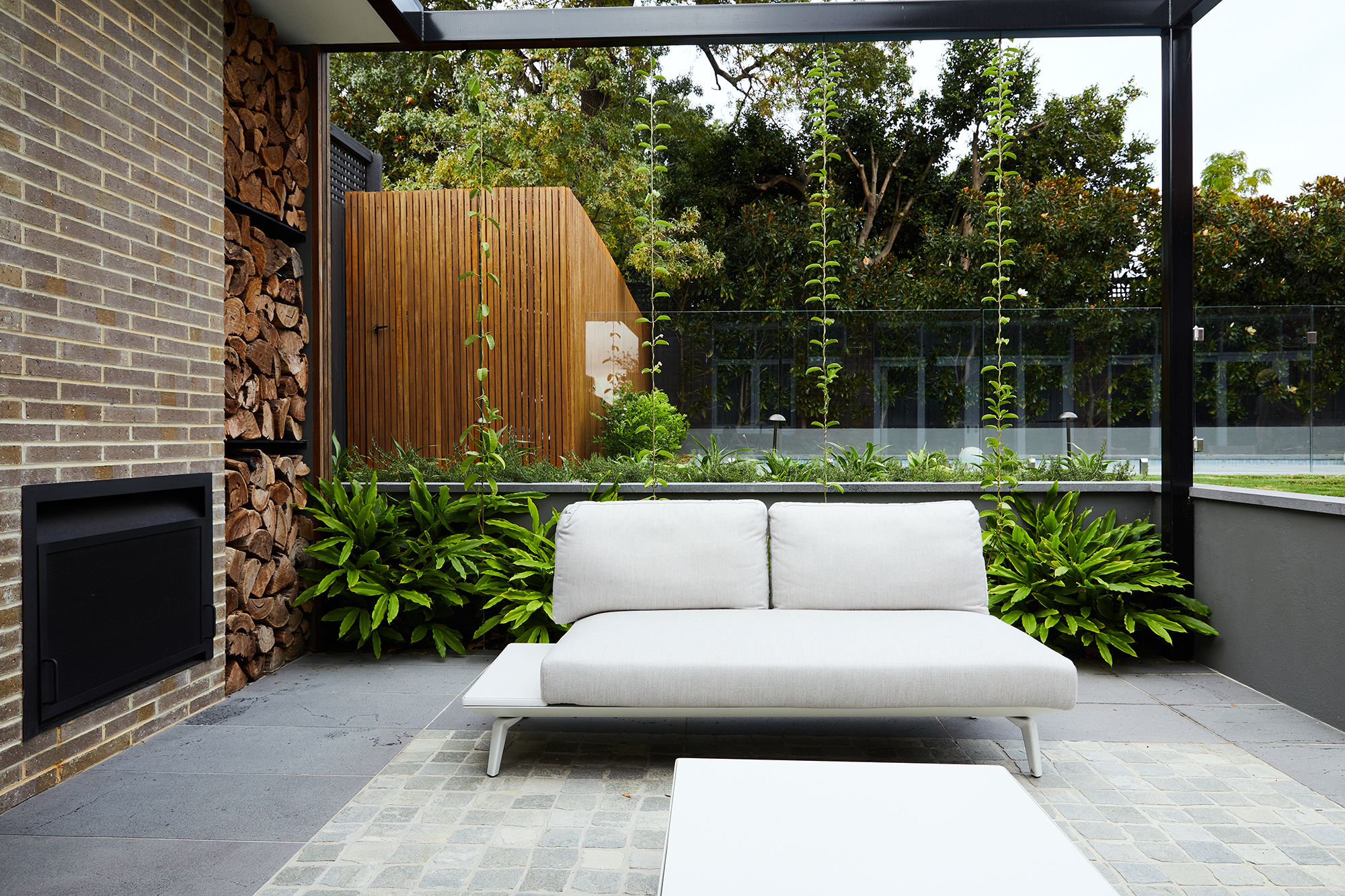
Light shapes mood, and the light you get in a garden is a design decision rather than a given. Overhead structures do most of it. At Albert Park Pavilion, a steel pergola with a timber-lined roof turns a small corner into somewhere you would sit in February and again in July. At Windsor Alfresco the mesh panels built into the timber pergola give climbing plants something to take hold of, so the shade thickens year on year and the light that comes through it softens as the planting matures.
After dark, lighting decides whether the garden exists at all. It’s the item most people cut when the budget tightens, and cutting it costs them the garden every evening from autumn through to spring. At Kew Canopy, the lighting runs up through the planting, so from inside at nine at night the beds are still there instead of a black window. At Toorak, the fire pit does something lighting can’t, which is give people a warm thing to sit around and face.
What colour actually does in a garden
Colour psychology is where garden writing usually goes vague, so it’s worth being careful. There is no good evidence that painting a fence a particular shade will make you calmer. What is well established is simpler and more useful.
Warm colours advance and cool colours recede. Reds, oranges and bright yellows pull the eye and shorten a space. Blues, purples and grey-greens sit back and make a boundary feel further away. In a small Melbourne courtyard, cool tones at the far end and one warm focal point near the house will read as deeper than the same garden planted the other way round.
The other half of it is that green is the bulk of the palette and foliage is what delivers it. Flowers are seasonal, so a garden that leans on them looks flat for months. At Kew Curve we worked with contrasting foliage, layering leaf shapes, textures and tones against each other rather than sorting plants into native and exotic, so the garden still holds your interest in July. Bluestone gives Melbourne gardens their cool blue-grey base, which is part of why it sits so easily against both period and modern houses here.

How we build these decisions into a garden design
We work in three stages before anything gets built, and the psychology is settled in the first two.

Consultation
A conversation about how you want the garden to feel and what you need it to do. Six people for dinner on a Saturday, somewhere shaded to read, a lawn that survives kids. This is where enclosure, sightlines and the views from inside get raised, because they are cheap to change on paper and expensive to change later.

Site Inspection
A full site analysis: soil, aspect, drainage, existing features and access. Aspect decides where the afternoon sun lands, which decides where the seat goes. Drainage decides what will grow. Melbourne clay holds water, and no amount of good planting design survives a bed that stays wet.

Quote
Construction documentation and a written specification, then a detailed quote. Design and documentation generally run two to six weeks depending on the complexity of the site.
The same team then builds it. When the designer and the builder are different companies, the compromises get made on site without you in the room, and the decisions that go first are usually the ones in this article: the lighting, the screening, the extra tree that was holding the sightline together.
Where to start if the garden feels wrong and you can't say why
Stand inside, at the window you look out of most, and ask what your eye lands on. Then stand in the garden with your back to the house and ask where you would sit if there were somewhere to sit.
Those two answers cover most of what’s in this article. If the view ends on a fence, the problem is the outlook. If you can’t pick a spot, the problem is that the garden has no anchor. If you can pick one but you’d feel watched sitting there, the problem is the boundary, and the answer is filtering rather than building higher.
Key Takeaways
- Design the view from inside first. It’s the part of the garden you use most, and Ulrich’s tree-view finding has held up for four decades.
- Screen with battens, planting or slatted structures rather than solid fencing. You want the sightline blocked and the light kept.
- Place seating before planting, with cover behind and an outlook in front. Then design the rest of the garden as the thing you look at from there.
- Layer planting hard, then hold it together with one repeated material or plant so it reads as ordered rather than busy.
- Add water where the garden is noisy, and layered planting where you want birds. Both are supported by Buxton et al. (2021).
- Budget the lighting at the start. It’s the first thing people cut, and cutting it costs you the garden for half the year.
Garden design and mood questions we get asked
Yes, and the effect is measurable rather than a matter of taste. Studies have linked views of greenery to faster recovery after surgery (Ulrich, 1984), better sustained attention after a 40 second look (Lee et al., 2015), and lower odds of psychological distress for people living in areas with 30% or more tree canopy (Astell-Burt and Feng, 2019). What a designer controls is the specifics: what you see from inside, how enclosed the space feels, what you hear, and whether there is anywhere worth sitting.
Biophilic design is the practice of building human contact with nature into a space deliberately rather than leaving it to chance. The most cited version is the 14 patterns set out by Browning, Ryan and Clancy (2014), grouped into nature in the space (views of planting, water, changing light, airflow), natural analogues (natural materials, organic forms, complexity held in order) and nature of the space (prospect, refuge, mystery). In a residential garden it mostly comes down to sightlines, planting layers, water, screening and where you put the seat.
Foliage matters more than flowers, because foliage is there all year. Layer grasses for movement, sculptural shrubs as focal points and perennials for seasonal colour, then repeat a few species so the planting reads as ordered. Cool tones at the far end of a small garden make it feel deeper. For birdsong, choose plants that offer seed, nectar and cover rather than one showy specimen. Water-wise species and drip irrigation put water at the roots rather than into the air, which matters under Victoria’s permanent water saving rules.
Filter the boundary instead of raising it. Timber batten screens, slatted gates and climbers on a trellis give you privacy while letting light and air through, so the space keeps its depth. Gravel and light-toned paving reflect more light than dark hard surfaces. Break the floor into more than one zone so you can’t take the whole courtyard in from the door, and put one focal point where the eye lands. Height in planting is your friend. Solid fencing at eye level is not.
The evidence is reasonable. Buxton et al. (2021) synthesised around three dozen studies of natural sound and found water sounds carried the strongest association with better health outcomes and positive feeling. Two practical points: still water and moving water do different jobs, since a reflection pond gives you light and sky while a spill or fountain gives you sound, and a water feature only masks traffic noise if it sits between you and the road.
Spring is a sensible time to start the design, and that is different from starting the build. Design and documentation generally take two to six weeks, and construction runs from a few weeks to several months depending on the scale. Starting the conversation in early spring gives most projects a realistic run at being finished and settling in before summer. Planting itself establishes best in autumn and spring, when the soil is warm and the weather is not fighting you.
No, we don’t offer maintenance. Design and construction is what we do. What we do give you at completion is a handover document explaining how your garden works and what it needs through the year, and we’re happy to recommend maintenance gardeners we work alongside. It’s worth doing. Layered planting is the kind that rewards attention, and a garden built on the decisions in this article loses its structure faster than a lawn does if nobody keeps the lines.
References
Appleton, J. (1975). The Experience of Landscape. Wiley.
Astell-Burt, T. and Feng, X. (2019). Association of Urban Green Space With Mental Health and General Health Among Adults in Australia. JAMA Network Open, 2(7), e198209.
Browning, W.D., Ryan, C.O. and Clancy, J.O. (2014). 14 Patterns of Biophilic Design. Terrapin Bright Green.
Buxton, R.T., Pearson, A.L., Allou, C., Fristrup, K. and Wittemyer, G. (2021). A synthesis of health benefits of natural sounds and their distribution in national parks. PNAS, 118(14), e2013097118.
Dosen, A.S. and Ostwald, M.J. (2016). Evidence for prospect-refuge theory: a meta-analysis of the findings of environmental preference research. City, Territory and Architecture, 3(4).
Kaplan, R. and Kaplan, S. (1989). The Experience of Nature: A Psychological Perspective. Cambridge University Press.
Lee, K.E., Williams, K.J.H., Sargent, L.D., Williams, N.S.G. and Johnson, K.A. (2015). 40-second green roof views sustain attention: The role of micro-breaks in attention restoration. Journal of Environmental Psychology, 42, 182-189.
Ulrich, R.S. (1984). View through a window may influence recovery from surgery. Science, 224(4647), 420-421.
White, M.P., Alcock, I., Grellier, J., Wheeler, B.W., Hartig, T., Warber, S.L., Bone, A., Depledge, M.H. and Fleming, L.E. (2019). Spending at least 120 minutes a week in nature is associated with good health and wellbeing. Scientific Reports, 9, 7730.