In Short
- A smart irrigation system waters according to what the garden needs, using a controller that reads weather data or soil moisture instead of running on a fixed timer.
- Drip suits garden beds and pots, spray suits lawn, and most Melbourne gardens need both on separate zones.
- Under Victoria’s Permanent Water Saving Rules, automatic watering systems can only run between 6pm and 10am.
- How you divide the garden into zones matters more than which brand of controller you buy.
- Installing irrigation during a landscape build is simpler than retrofitting, because pipe and sleeves go in before the paving and planting.
The first 35-degree day of the Melbourne summer usually arrives before anyone has checked the irrigation. The timer is still on its winter setting, one dripper line was cut when the new fence went in, and the sprinkler by the path has been watering the pavers since March. By the time the leaves curl, the damage is done.
We’ve spent 30 years building gardens across Melbourne, and irrigation is the part homeowners think about least until something wilts. Here is how smart irrigation works, how to choose between drip and spray, and how to set a system up for a Melbourne summer and the local watering rules.
How does a smart irrigation system work?
A smart irrigation system is an automatic watering system that adjusts itself. It changes the schedule to match weather, rainfall or the moisture in the soil, so it isn’t watering the same minutes on the same days whatever the conditions.
A typical system has these parts:
- The controller. A Wi-Fi connected unit, usually managed from a phone app, that runs each zone and stores the schedule.
- Weather adjustment. The controller pulls local forecast and rainfall data and shortens, skips or extends watering to match.
- Sensors. A rain sensor stops a cycle when it has rained. A soil moisture sensor reads how wet the ground actually is.
- Valves and zones. Each valve controls one zone, a group of plants with similar water needs.
- Emitters. Drippers, drip line, sprays or rotors that deliver the water.
- Flow monitoring. Some controllers watch the flow rate and send an alert when a pipe breaks or a fitting blows.
The real benefit is accuracy. Your garden gets what it needs in a heatwave and nothing extra in a wet week.

Drip vs spray irrigation: which suits your garden?
Drip irrigation delivers water slowly at or below the soil surface, close to the roots. Spray irrigation throws water through the air over an area. Each has a job, and the right answer for most gardens is both, on separate zones.
| Drip irrigation | Spray or pop-up irrigation | |
|---|---|---|
| Best for | Garden beds, hedges, pots, planters, trees | Lawn and dense groundcover |
| Water efficiency | High, very little lost to wind or evaporation | Lower, some water drifts or evaporates |
| Wet foliage | No, which reduces fungal problems | Yes |
| Visibility | Hidden under mulch | Heads visible when running |
| Suits Melbourne clay | Yes, slow delivery soaks in without runoff | Can run off if applied too fast |
| Main weakness | Harder to spot a blocked or cut line | Overspray onto paths, fences and walls |
Yarra Valley Water describes subsurface drip on a timer, run overnight, as the most efficient and effective way to water a garden (Yarra Valley Water). It is what we install in the gardens we build, because it takes water straight to the roots.
Smart irrigation controllers and soil moisture sensors
A controller can decide when to water in two ways, and they work best together.
Weather-based controllers adjust the schedule from forecast temperature, rainfall and evaporation. They respond well to a run of hot days or an unexpected storm, but they’re estimating what the garden needs.
Soil moisture sensors measure it. A probe sits in the root zone and tells the controller when the soil has dried to a set point. The limitation is that a sensor reads one spot. Put it in the shadiest corner and the sunny beds go thirsty. Next to a dripper, it never calls for water. It needs to sit in a representative part of the zone it controls, at root depth.
If you’re choosing a controller, look for zone-by-zone scheduling, rain sensor support, leak alerts and a one-step seasonal adjustment.
Zoning your garden by plant type
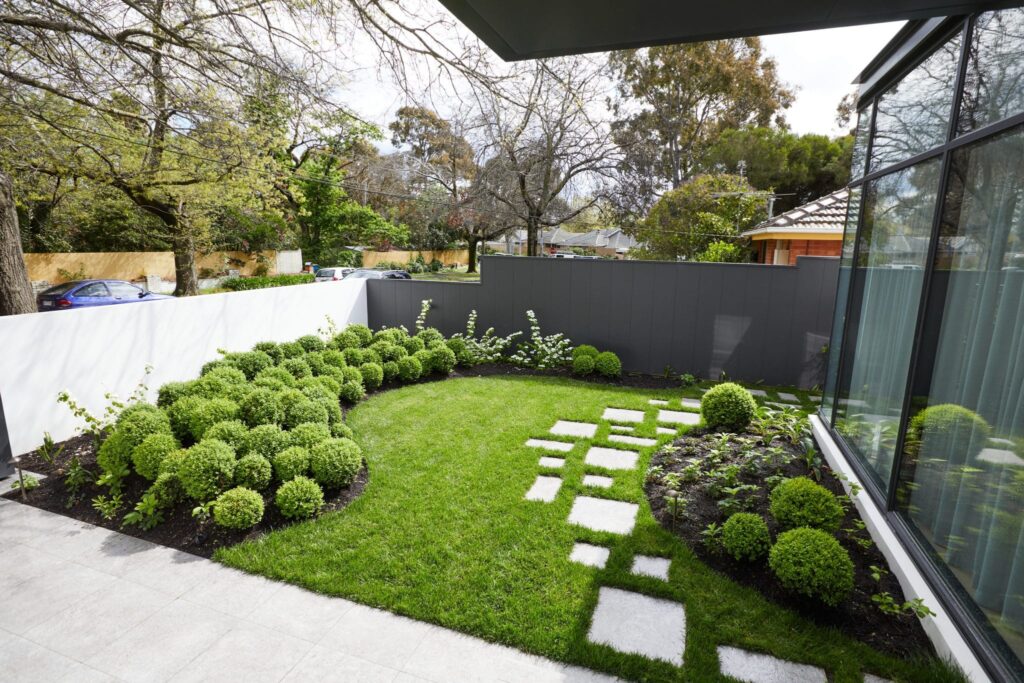
Zoning means grouping plants with similar water needs onto the same valve, and it affects how well your system works more than anything else. A zone that mixes lawn, shrubs and new seedlings will overwater one group and underwater another, however clever the controller is.
Here’s a practical zoning plan for a Melbourne garden:
- Lawn on its own spray or sub-surface zone.
- Established beds and hedges on drip, watered deeply and infrequently.
- New planting on its own drip zone, so it can be watered more often in its first summers and cut back later.
- Pots, planters and vegetable beds, which dry out fastest and need the most frequent watering.
- Trees, with drippers spread out towards the edge of the canopy, where the feeder roots are.
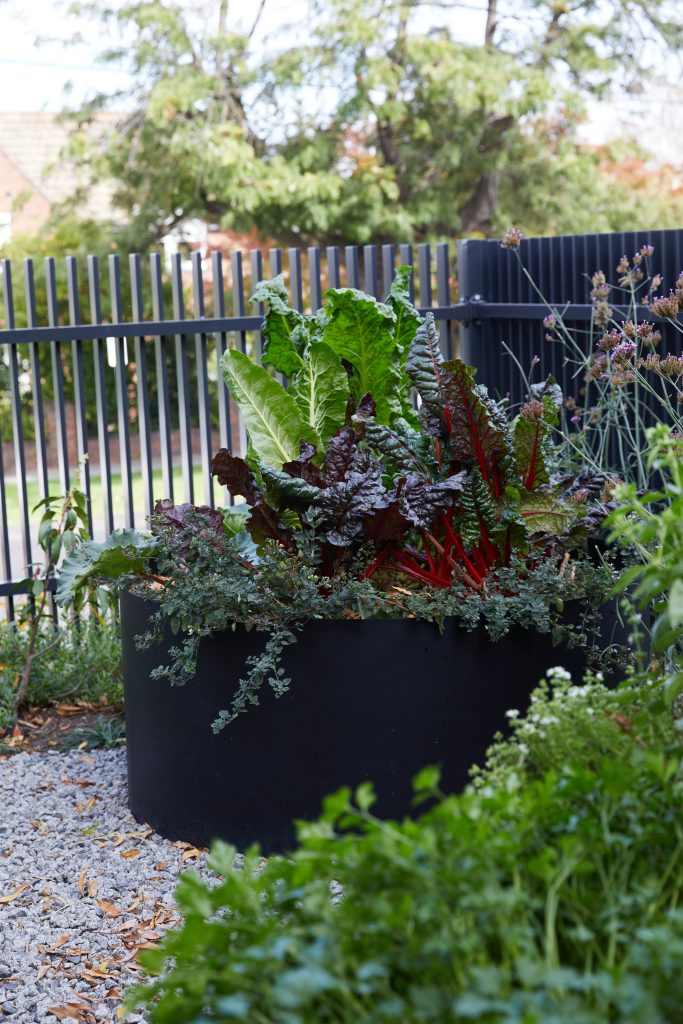
In our Kew Curve garden, the raised steel planters for edibles sit beside layered ornamental planting. Planters like these dry out far faster than the beds around them, which is the kind of difference a zoning plan has to account for.
Watering rules in Melbourne and summer irrigation settings
Victoria’s Permanent Water Saving Rules apply across Melbourne at all times. The ones that affect garden irrigation are:
- Watering systems, manual or automatic, can only be used between 6pm and 10am.
- Hand watering with a hose, watering can or bucket is allowed at any time.
- Hoses must be leak free and fitted with a trigger nozzle.
As at September 2026, Melbourne Water reports no water restrictions in place for Melbourne. Restrictions can return if storage levels fall, so check your water retailer’s site before each summer. Melbourne Water also runs Target 150, a voluntary goal of no more than 150 litres per person per day.
For summer, these settings suit most established gardens:
- Water in the early morning, finishing before 10am, so plants go into the heat of the day with moisture in the root zone.
- Water deeply and less often. Longer, less frequent cycles push roots down into cooler soil. Short daily sprinkles keep roots shallow.
- Split long cycles on clay. Two shorter cycles an hour apart let water soak in before it can run off.
- Raise the seasonal adjustment before a heatwave, then bring it back down afterwards.

Retrofitting irrigation vs installing it during a landscape build
You can add irrigation to an established garden, but it’s simpler and neater during a build, because nothing is in the way yet.
During a build, pipe runs are planned with the planting and paving. Sleeves go under paths and driveways before they’re laid, zones are designed around the planting plan, and the controller position is chosen with power and Wi-Fi in mind. On our builds, irrigation is part of the landscape construction scope from the start, and the handover document we provide at completion explains how the system is set and how to adjust it through the seasons. If you’d rather not look after it yourself, we also offer an optional ongoing maintenance service once your garden is complete.
In an established garden, the work has to go around what’s there. These factors change the size of the job:
- Whether pipe can run through garden beds or has to cross existing paving
- How many zones the planting needs
- Water pressure and flow at the tap
- Where the controller can go, and whether it has power and Wi-Fi
- How much planting has to be lifted or replaced
Often the most useful retrofit is the simplest one: swap your old timer for a smart controller and rework the zones, keeping the pipe that already works.
Key Takeaways
- Choose a controller that adjusts for weather, and add a soil moisture sensor placed in a representative part of the zone it controls.
- Put garden beds, pots and trees on drip, keep lawn on its own spray zone, and never mix new planting with established plants on one valve.
- Set automatic watering to run between 6pm and 10am to meet Victoria’s Permanent Water Saving Rules, and finish before 10am in summer.
- Water deeply and less often, and split cycles on clay so water soaks in.
- Check the system before the first heatwave: run each zone, look for dry patches, blocked drippers and overspray.
Smart irrigation FAQ
It can run the valve that refills a pond, but a float valve or water level sensor should decide when to open it. A timer alone can overfill or leave a pump running dry.
If you’re planning a new garden and want irrigation designed alongside the planting, start with a landscape consultation. You can also see how it fits into our landscape construction work, or contact us about your project.