In Short
- Regenerative landscaping designs a garden to leave its soil, water and wildlife in better condition each year.
- It asks more of a garden than “sustainable”, a word that is easy to claim and hard to check.
- In Melbourne it starts with the ground: reactive clay across much of the east, sand near the bay, and long dry spells between wet winters.
- Living soil, rain held on the block and plants chosen for the site do most of the work once the garden establishes.
- The fastest way to test any landscaper’s claims is to ask what they do to the soil, where the water goes and what happens to the waste.

What is regenerative landscaping?
Regenerative landscaping is an approach to designing and building gardens that improves the health of the site over time. Over the years the soil gets richer, more rain soaks in and stays, and more local wildlife moves in. The idea comes from regenerative agriculture, where a farm is judged by the condition of the land after the harvest as well as by the harvest itself.
In a garden, that comes down to five working principles:
- Soil first. Protect the topsoil, avoid compacting the ground, feed soil life with organic matter and keep the surface covered with mulch or plants.
- Plants chosen for the site. Every plant is picked for how well it copes with the soil, aspect and conditions, with local indigenous species a strong option where the site and the brief suit them.
- Rain held on site. Water is directed into garden beds, gravel and permeable surfaces, and less of it reaches the stormwater drain.
- Habitat in layers. Groundcovers, shrubs and canopy give birds, lizards and insects food, shelter and somewhere to nest.
- Fewer inputs over time. Once established, the garden needs less water, less fertiliser and less chemical control than it did in its first year.
Regenerative vs sustainable landscaping: what's the difference?
Sustainable landscaping sets out to reduce harm. Regenerative landscaping sets out to leave the site better than it was. The difference sounds small, but it changes what gets measured.
There’s no agreed standard behind “sustainable” in residential landscaping, so a garden can earn the word with a few natives. A regenerative claim is harder to make, because you can check it: soil that drains after rain, plants that stop needing water, wildlife that wasn’t there before. Our guide to sustainable gardening and landscaping design covers the reduce-harm side in more detail.
| Question | Sustainable landscaping | Regenerative landscaping |
|---|---|---|
| Main goal | Reduce the garden's impact | Improve the site year on year |
| Soil | Avoid waste and chemicals | Build soil structure and soil life |
| Water | Use less of it | Hold more rain on site and use less |
| Plants | Water-wise choices | Plants suited to the site, layered for habitat |
| How you'd know | Lower inputs on day one | Better soil, drainage and wildlife over years |
- What happens to the topsoil and the existing ground during construction?
- Where does the rain go once the garden is built?
- What happens to the waste that leaves the site?
Regenerative landscaping in Melbourne conditions
Regenerative design only works when it responds to the actual ground and climate. Melbourne has three conditions that shape almost every decision.
Melbourne’s clay soils
Much of eastern and inner Melbourne sits on heavy clay that swells when wet and shrinks and cracks as it dries. Bayside suburbs lean sandier, and the west has its own basalt clays. Clay holds water and nutrients well, which makes it a good growing medium once its structure is right. The trouble is compaction. A few passes of a loaded machine can turn a garden bed into something closer to a pot with no drainage hole.
The regenerative fix is to keep heavy machinery off future beds, break up compacted layers before planting, and work in organic matter over time. Gypsum helps some clays, but only sodic ones, so it’s worth testing before treating (Victorian Resources Online explains the difference). Mulch does the rest, feeding soil life and stopping the surface from baking hard.
Drought cycles and summer heat
Melbourne’s rain arrives unevenly. The Millennium Drought ran through most of the 2000s, and southern Australia’s cool-season rainfall has trended down over recent decades (Bureau of Meteorology). A garden designed for an average year struggles in a dry one.
The answer is to hold rain on your block. Set beds slightly lower than paths so runoff soaks in, use gravel or open-jointed paving, and mulch thickly to slow evaporation. Drip irrigation gets new planting through its first summers, ideally on a controller that waters only when the soil needs it.
Local indigenous plants
Indigenous means native to this particular area, which is narrower than native to Australia. A Western Australian kangaroo paw is native. Kangaroo Grass is indigenous to Melbourne, adapted to its clay, its rainfall and the insects and birds that depend on it.
Reliable indigenous plants for Melbourne gardens include:
- Kangaroo Grass (Themeda triandra) and Common Tussock-grass (Poa labillardierei) for movement and texture
- Spiny-headed Mat-rush (Lomandra longifolia) and Black-anther Flax-lily (Dianella revoluta) for tough, strappy edges
- Common Correa (Correa reflexa) for winter flowers that feed honeyeaters
- Common Everlasting (Chrysocephalum apiculatum) as a sunny groundcover
- Silver Banksia (Banksia marginata) and Sweet Bursaria (Bursaria spinosa) for structure and habitat
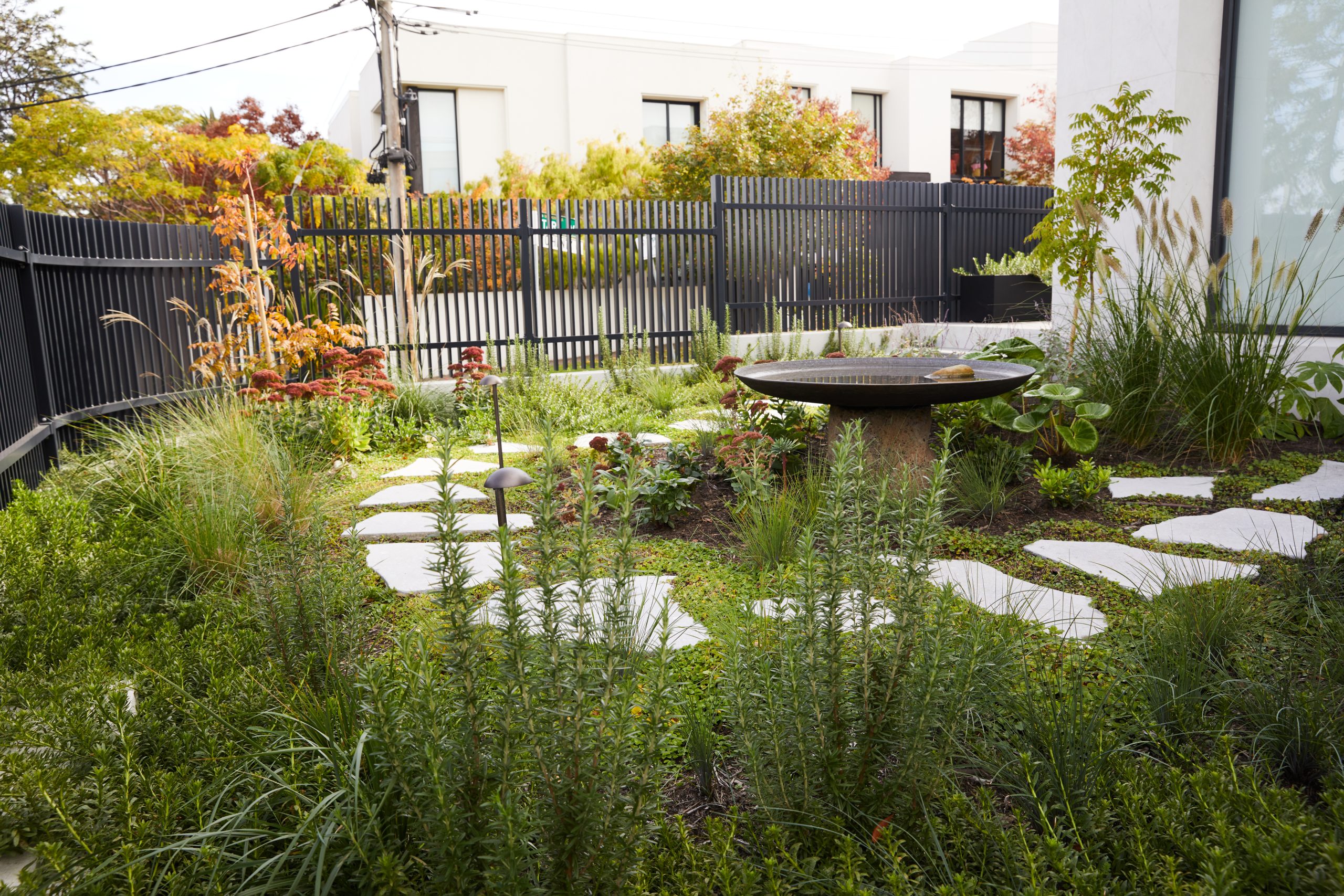
A regenerative garden doesn’t have to be indigenous. Our Kew Curve garden, for example, is built on contrasting foliage, with natives and exotics mixed for leaf shape and texture. The principle is to choose every plant for how well it copes with the site, and to bring in local species where they suit the design.
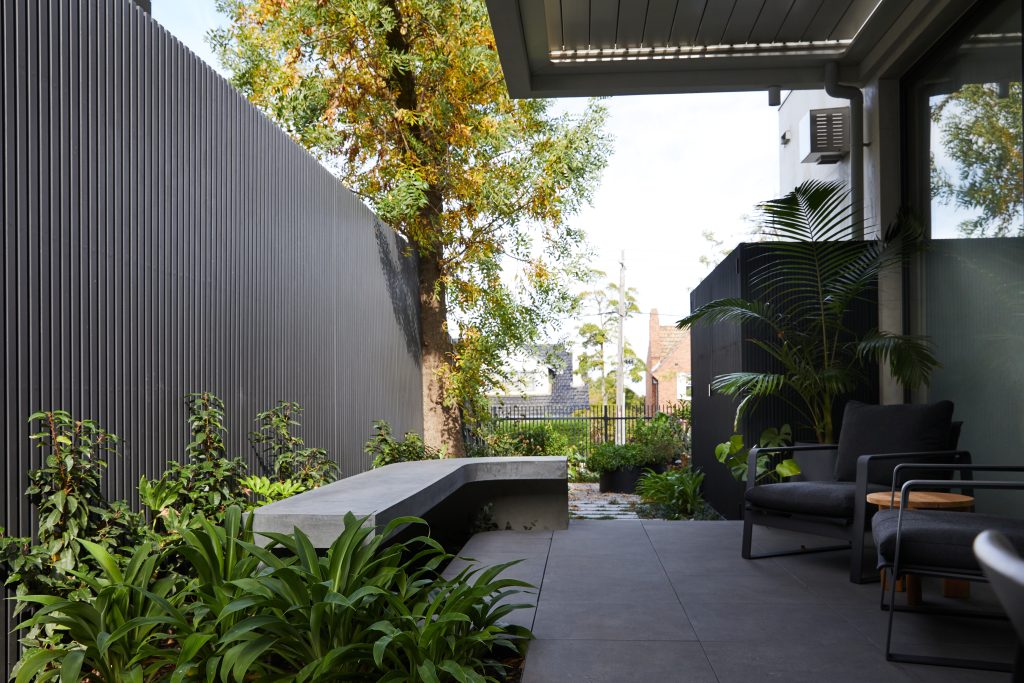
What regenerative garden design looks like on a build
We’d rather show you what we actually do than put a label on our gardens. These are the practices behind our landscape construction work, as they’re set out on our sustainability page:
- Waste kept out of landfill. Concrete rubbish is recycled, used plastic pots are recycled, green waste is composted, and soil we remove goes to depots to be re-blended.
- Local materials. We make every effort to use locally made and sourced pavers and stone.
- Australian timber. Most of the timber in our gardens is grown in Australia. Our cypress battens are 100% sustainable Australian timber that resists rot and termites without chemical treatment, and the radial cut milling reduces waste.
- Drip irrigation and water-wise planting. Our gardens are fitted with drip irrigation that takes water straight to the roots, and we use water-wise plants where the site needs them or a client asks for them.
- Native and indigenous planting when it suits. We plant native or indigenous species when a client asks for them, or when the site calls for it, such as a coastal property where local plants cope better with salt and wind.
- Reading the site first. Every design starts with a site inspection covering soil, aspect, drainage, existing features and access, so the design responds to the ground it sits on.
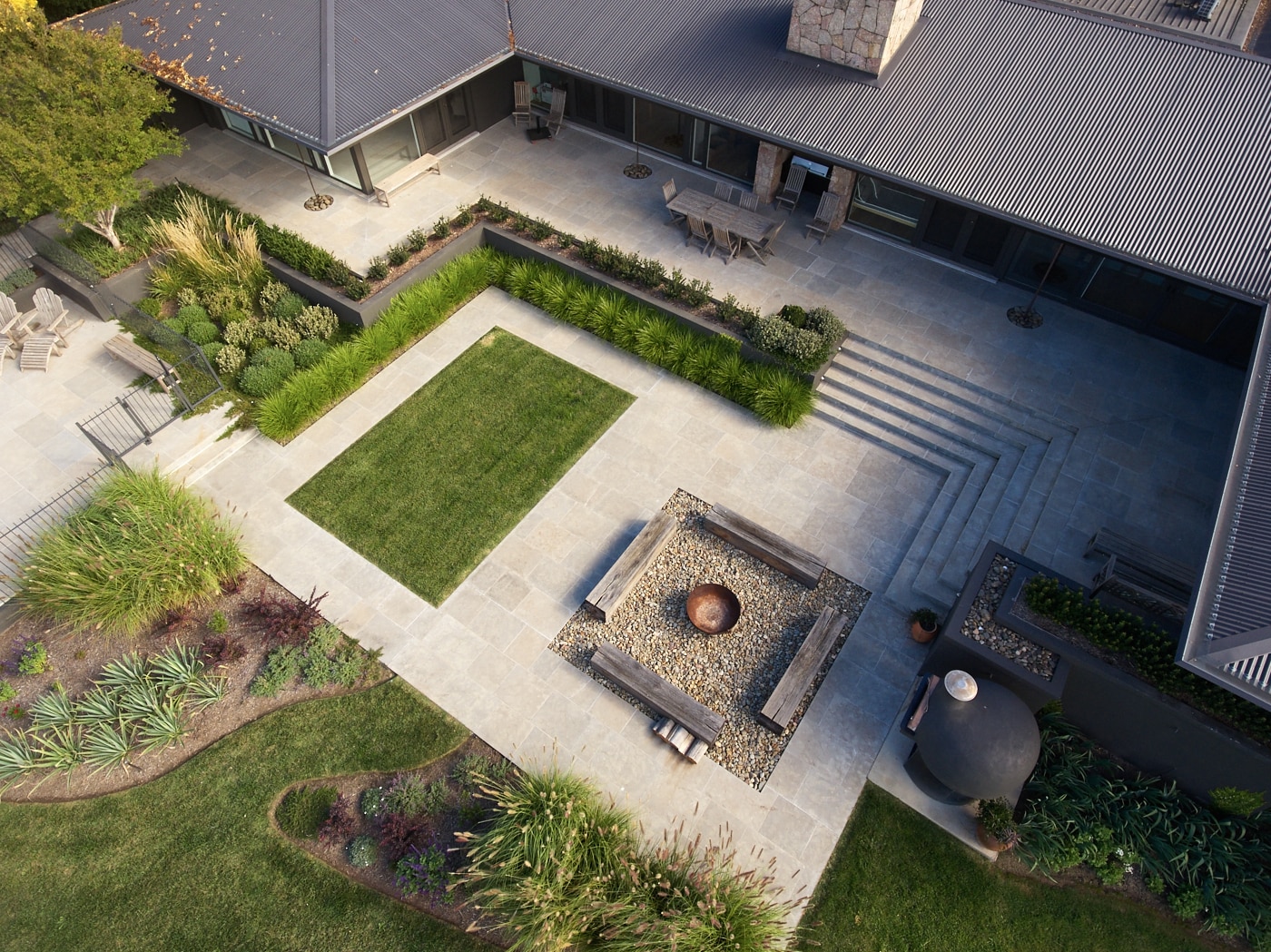
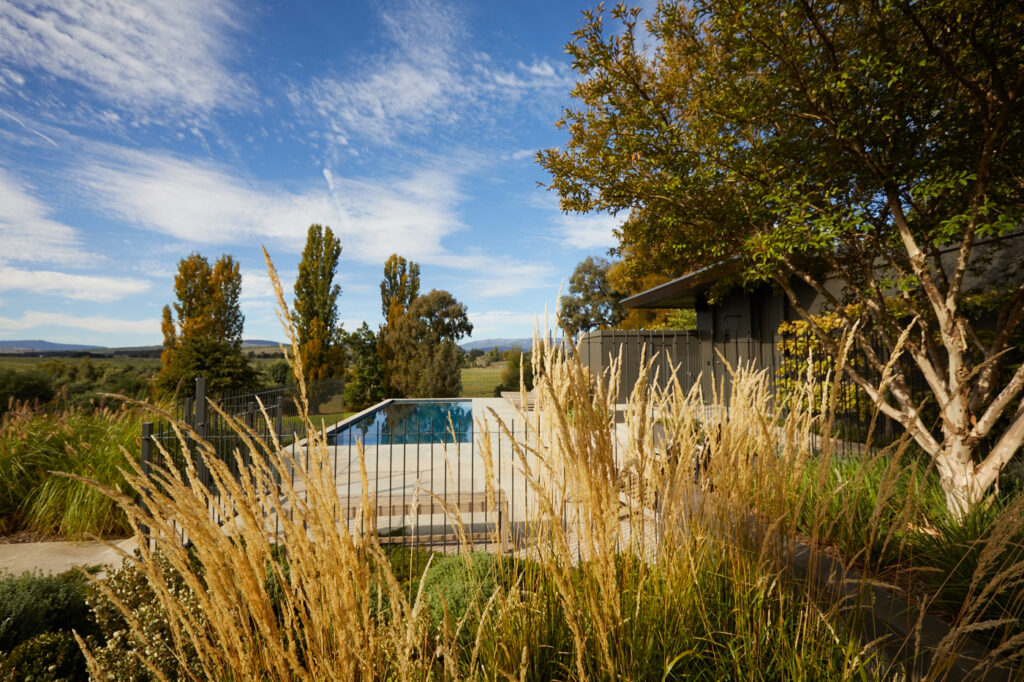
You can see some of this in our finished gardens. In Caulfield, gravel paths and raw timber give the garden a soft, natural feel, and the gravel lets rain soak straight in. At Kew Curve, dichondra grows between the stones of a crazy paving path, softening the joints and keeping soil covered. And in East Melbourne, ornamental grasses thread through perennials with shrubs and trees above, the kind of layering that gives wildlife somewhere to live.
We don’t claim a building site leaves no footprint. Machinery, deliveries and new materials all have a cost. The point of regenerative thinking is that the garden should repay it over the years that follow.

Why regenerative landscaping matters for your garden
Key Takeaways
- Regenerative landscaping means designing a garden to improve its soil, water retention and biodiversity over time.
- Treat “sustainable” as a question, and ask what happens to the soil, the rain and the waste.
- In Melbourne clay, avoiding compaction and adding organic matter usually matters more than any soil product.
- Hold rain on the block with lower beds, permeable surfaces and mulch, and use drip irrigation to get new plants established.
- Choose plants for how well they suit the site, and bring in local indigenous species where the site and the style suit them.
Regenerative landscaping FAQ
If you’d like a garden that keeps improving after handover, the first step is a landscape consultation, where we look at your soil, aspect and drainage and scope the work for your site. You can also browse our recent projects or get in touch.